

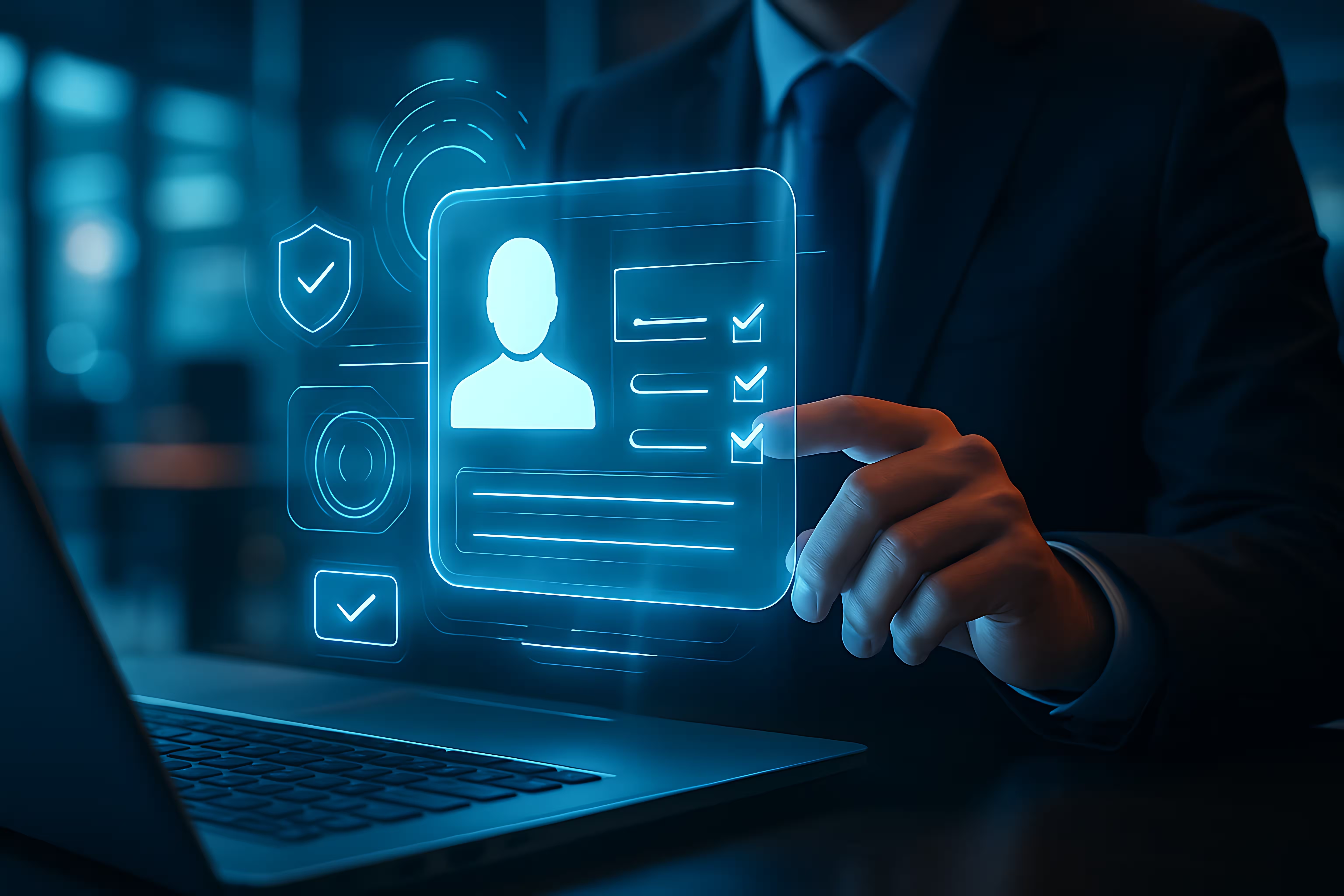
Digital onboarding and KYC
Verify identity during registration, account opening, financial product applications, platform enrollment, or digital profile creation.
Verify real users in seconds with 3D facial biometrics, liveness detection, and anti-spoofing controls designed to protect access, digital onboarding, and critical transactions.
Stronger security, less friction, and verification from any compatible camera-enabled device.

Many companies still verify identity with passwords, security questions, one-time codes, static ID data, or simple camera gestures. These methods may not be enough against impersonation attacks, social engineering, deepfakes, videos, photos, screens, masks, or tools designed to bypass digital security controls.
When identity is not properly verified, the impact goes beyond a poor user experience. It can lead to financial loss, unauthorized access, transaction fraud, operational rework, regulatory exposure, and loss of trust in digital channels.
Unicus strengthens this critical point: confirming that the person is real, present, and aligned with the identity attempting to access, register, or authorize an operation.
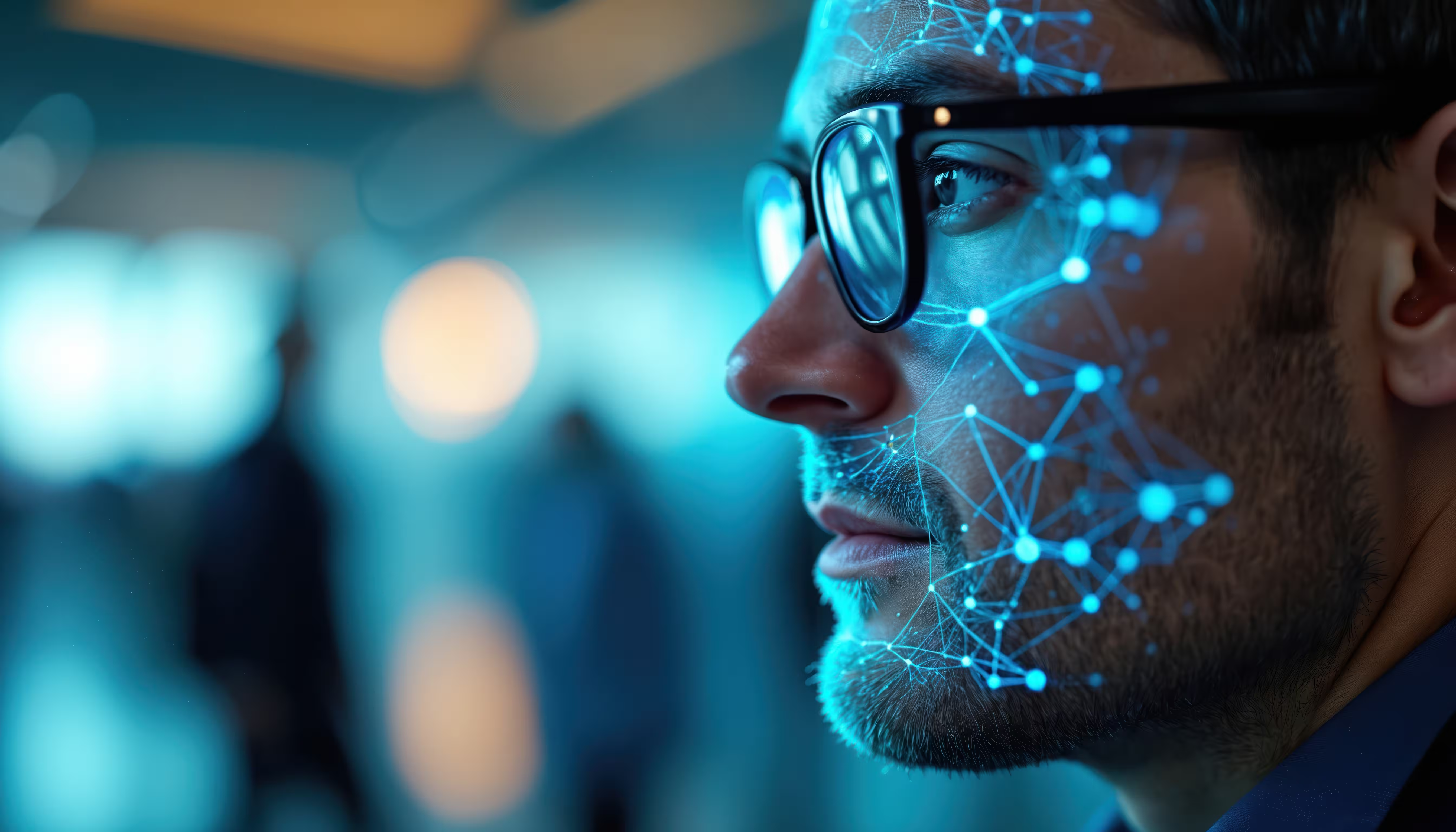
Unicus is a biometric identity verification ecosystem that validates people remotely, quickly, and securely through 3D facial biometrics and liveness detection.
The solution is designed to integrate into digital flows where user trust is critical: registration, authentication, account recovery, transaction authorization, access to sensitive information, and high-risk validations.
Unlike methods based only on data that can be stolen or shared, 3D facial biometrics validate unique physical traits and real-presence signals.
This helps reduce reliance on passwords, lower operational friction, and strengthen security across digital and in-person channels.
Unicus can integrate with web apps, mobile apps, kiosks, service points, transactional platforms, and existing enterprise systems. It can also be paired with document validation and business rules.
Unicus can be applied anywhere a company needs greater confidence about who is behind a transaction, request, or access attempt.
Verify identity during registration, account opening, financial product applications, platform enrollment, or digital profile creation.

Add a security layer for payments, transfers, purchases, disbursements, sensitive data changes, and high-value operations.

Integrate biometric verification into in-person or self-service experiences before critical operations are performed.

Support authentication for exams, certifications, virtual classes, or academic validations where participant identity must be confirmed.

Strengthen internal authentication when employees, vendors, or third parties access restricted systems, data, or workflows.

Apply biometric verification in neobanks, digital lending, reservations, ride-hailing, digital health, insurance, marketplaces, entertainment, government, and other environments where identity, security, and experience must align.

Authenticate users with facial biometrics, reducing dependence on passwords, security questions, and vulnerable account recovery flows.
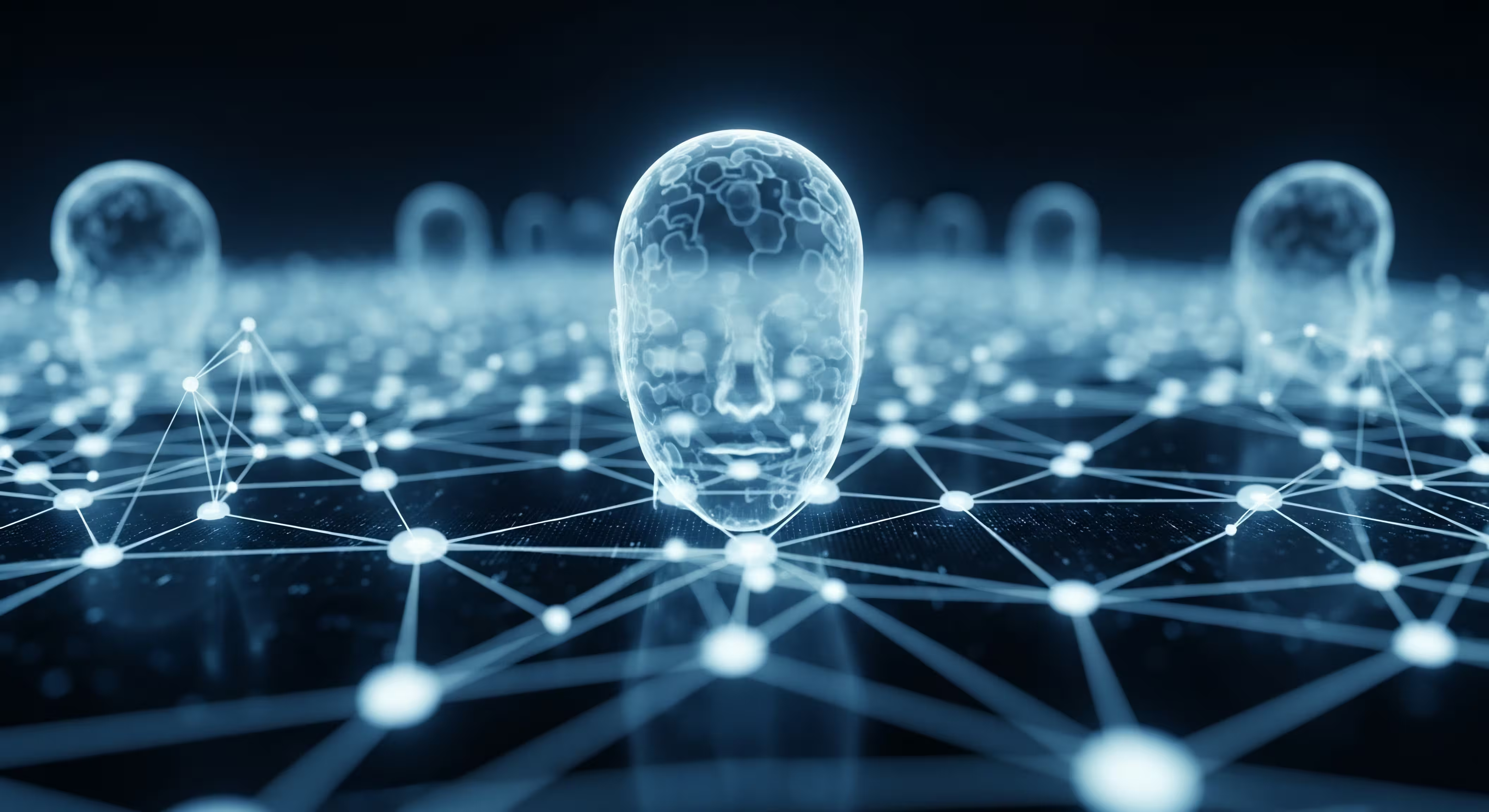


The user starts a simple flow from a compatible camera-enabled device. The experience should be fast, clear, and designed to minimize friction.
The solution analyzes real-presence signals to help detect impersonation attempts using photos, videos, screens, masks, camera injection, or artificially generated content.
During validation, the technology analyzes multiple frames and depth signals to create a three-dimensional biometric representation that is more robust than a 2D selfie.
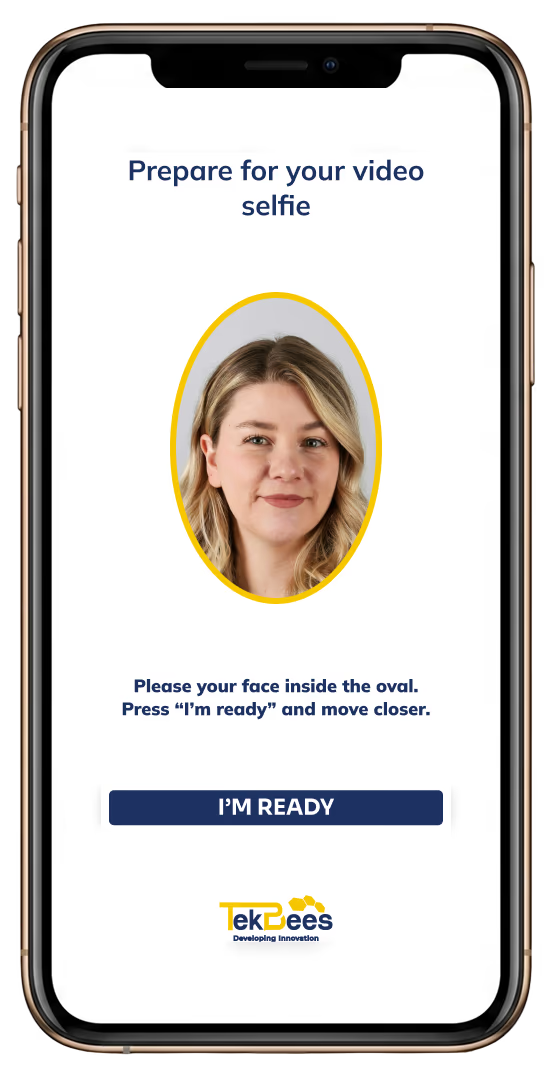
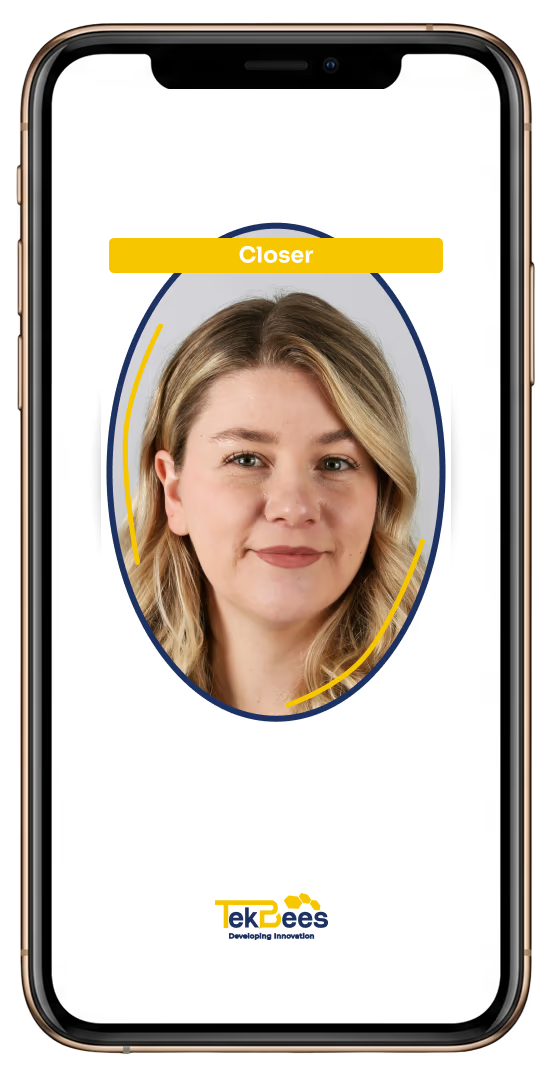
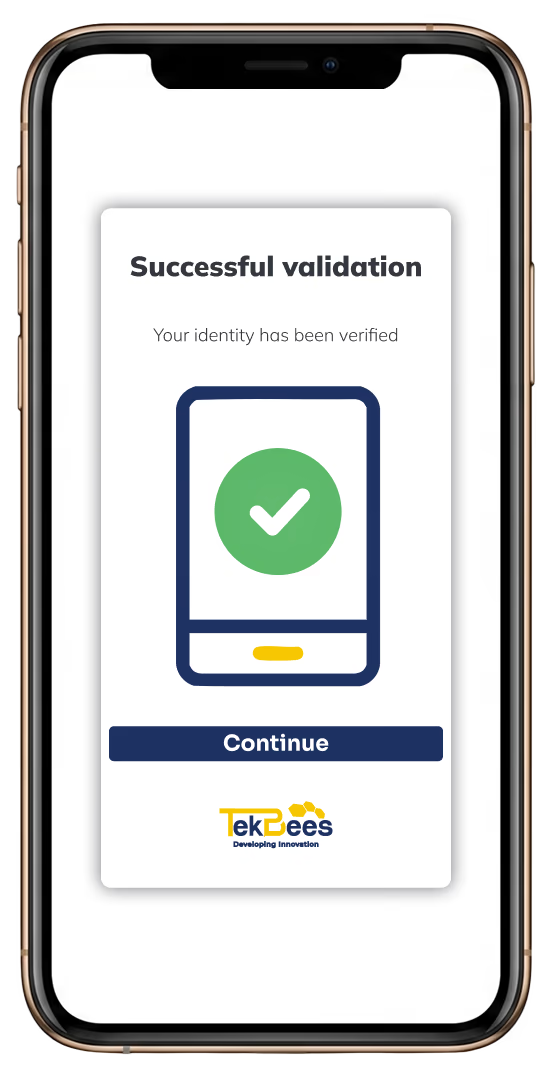
The system compares biometric information against the reference defined by the client’s flow, such as a prior enrollment, document validation, or an already registered identity.
The result can connect to approval rules, risk monitoring, traceability, audit, onboarding, login, transaction authorization, or service workflows.
2D biometrics can be useful for low-risk scenarios, but when fraud represents a real business risk, 3D validation provides a stronger layer of security because it analyzes depth, texture, liveness signals, and capture behavior.
Often depends on simple gestures such as blinking, smiling, turning the head, or looking at specific points.
Analyzes three-dimensional signals, depth, texture, and other indicators of real presence.
Limited, because it mainly works with flat images.
More robust, because it validates the behavior and three-dimensional structure of the face.
More exposed to photos, videos, screens, and digital manipulation.
Greater ability to detect spoofing attempts, deepfakes, masks, and other advanced attacks, depending on configuration.
Suitable for simple or low-risk scenarios.
Recommended for onboarding, transactions, access to sensitive information, and high-assurance processes.
Depends on the provider and the scope of testing performed.
Can be supported by technologies tested by accredited laboratories.
Add stronger controls to confirm real presence and reduce access or transaction attempts using false, stolen, or manipulated identities.
Verify identity through a fast, guided flow that reduces friction from manual processes, confirmation calls, or security questions.
Validate customers, users, employees, or third parties without requiring physical presence while maintaining traceability and control.
Introduce biometric verification at high-risk moments such as payments, transfers, account changes, access recovery, or sensitive operation approvals.
Connect with applications, portals, transactional systems, kiosks, CRM, core banking platforms, risk engines, or internal workflows depending on the client's architecture.
Create more verifiable processes, with evidence and clear rules to support regulated or high-demand operations.
01
We analyze the current process, risk points, user type, channels involved, and applicable regulations or internal policies.
02
We define when verification is required, what level of security is needed, what experience the user will see, and how approvals, rejections, or exceptions will be handled.
03
We connect the solution with your applications, transactional systems, databases, risk engines, or service platforms so identity verification becomes part of the real process.
04
We run functional, technical, and experience tests to validate performance, security, usability, and flow behavior before deployment.
05
We provide technical support and guidance to adjust rules, improve user experience, scale usage, and keep the service aligned with business goals.
Tell us what process you need to protect: onboarding, access, transactions, remote validation, or in-person service. Tekbees helps you implement Unicus as a secure, scalable biometric identity layer integrated into your operation.
Frequently asked questions
It is a process that verifies a person's identity using unique physical traits, such as the face, to confirm that the user is real and matches the identity attempting to access or perform an operation.
2D biometrics analyze flat images, while 3D facial biometrics use depth and real-presence signals to strengthen impersonation detection and improve trust in critical processes.
Unicus can be used as a biometric authentication layer to reduce reliance on passwords or complement other security factors, depending on each company's policy.
It can be integrated into web apps, mobile apps, transactional platforms, kiosks, service points, and enterprise systems that require identity verification for users, customers, employees, or third parties.
Yes. A well-designed flow can verify identity quickly, remotely, and with clear guidance, reducing manual steps and friction during access or transaction processes.
Unicus can be useful in financial services, fintech, insurance, digital health, education, government, entertainment, retail, transportation, digital platforms, and other environments where user identity is critical.


