

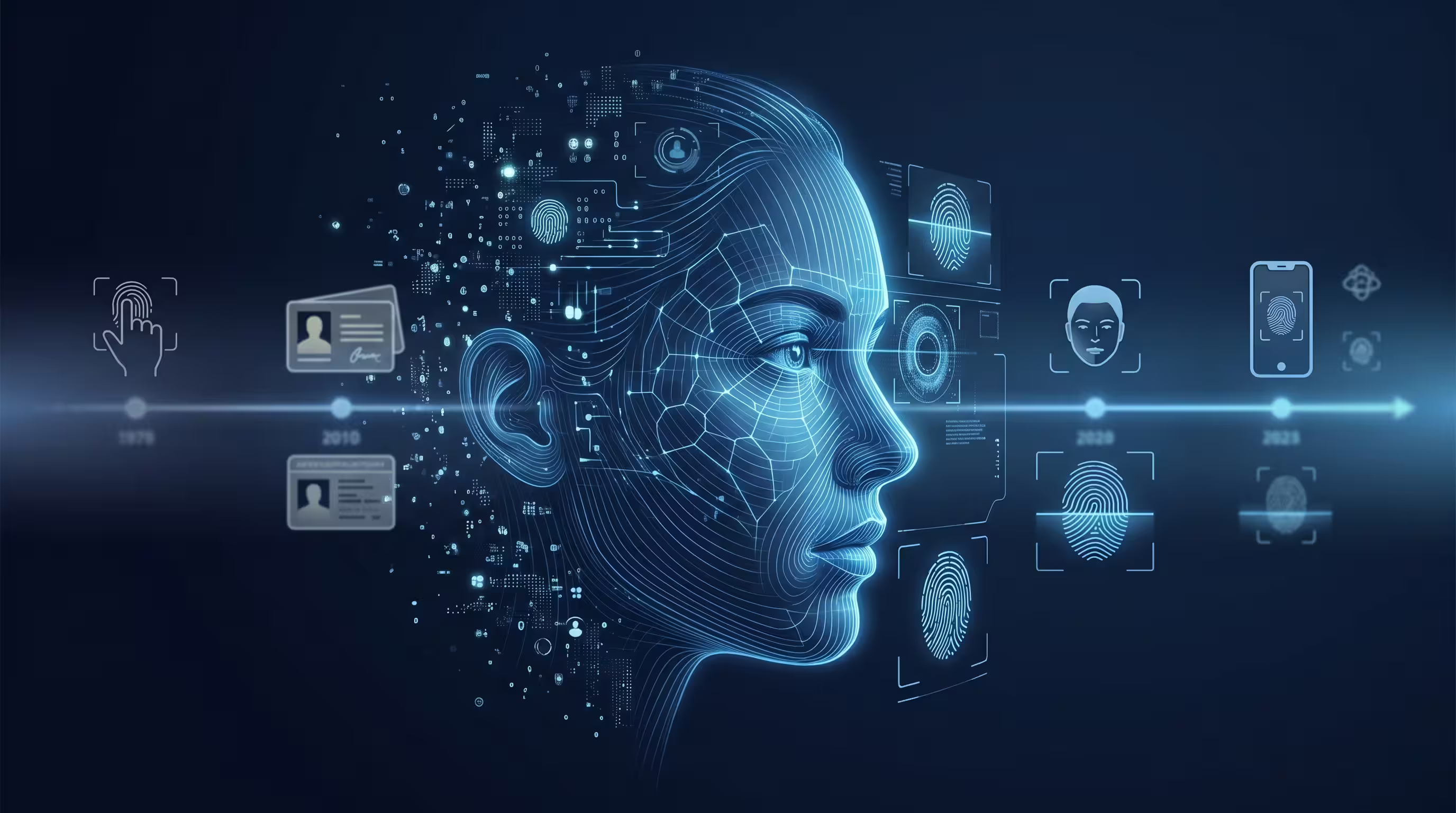
Biometrics has attracted enormous interest from global companies and users for its ability to improve security, speed and effectiveness in various sectors.
Although today we see that it is a sophisticated and intuitive technology, it has a history dating back to the 19th century with fundamental advances for the foundations of its development.
However, before reviewing the most important milestones, we need to understand what it is all about.
What is biometrics?
It is based on the analysis of physical or behavioral characteristics. The former are innate to each individual and do not change over time, such as fingerprints or facial features.
The latter correspond to the executed actions of each individual, which are subject to change over time, such as tone of voice or gait.
Milestones of biometric development:
- 1870 – Fingerprint identification: it was discovered that these are unique to each individual, allowing personal identification and becoming a valuable tool in law enforcement.
- 1892 -Publication of “Fingerprints” by Francis Galton: a book that established the individuality and permanence of fingerprints, laying the foundation for their modern use as a form of biometric identification.
- 1895s – Beginning of iris recognition: Alphonse Bertillon, a pioneering biometrics researcher, documented nuances in the human iris. This impacted the 1990s with the development of the first commercial iris recognition systems.
- 1960s – Development of voice recognition: although early implementations were basic, this marked the beginning of an important form of biometric identification.
- 1996s – Beginnings of face recognition: the Feret project, established to create a large database of facial images by NIST (National Institute of Standards and Technology), allowed the development of algorithms in this area, which led to the progress of more advanced face recognition technologies in the following years.
- 2000s – Present in consumer devices: biometrics was incorporated into laptops and cell phones. This included the use of fingerprints to unlock devices and authenticate transactions.
- 2013 – Introduction of Touch: Apple introduced it on the iPhone 5s in 2013, marking the first time biometrics were used so prominently on a mass consumer device.
- 2017 – Introduction of Apple Face ID: iPhone X marked the next series with facial recognition to unlock the device and authenticate transactions.
- Present – Increasing use of biometrics in multiple sectors: Recognition systems has revolutionized identity validation worldwide and has become an essential tool for companies in various industries.
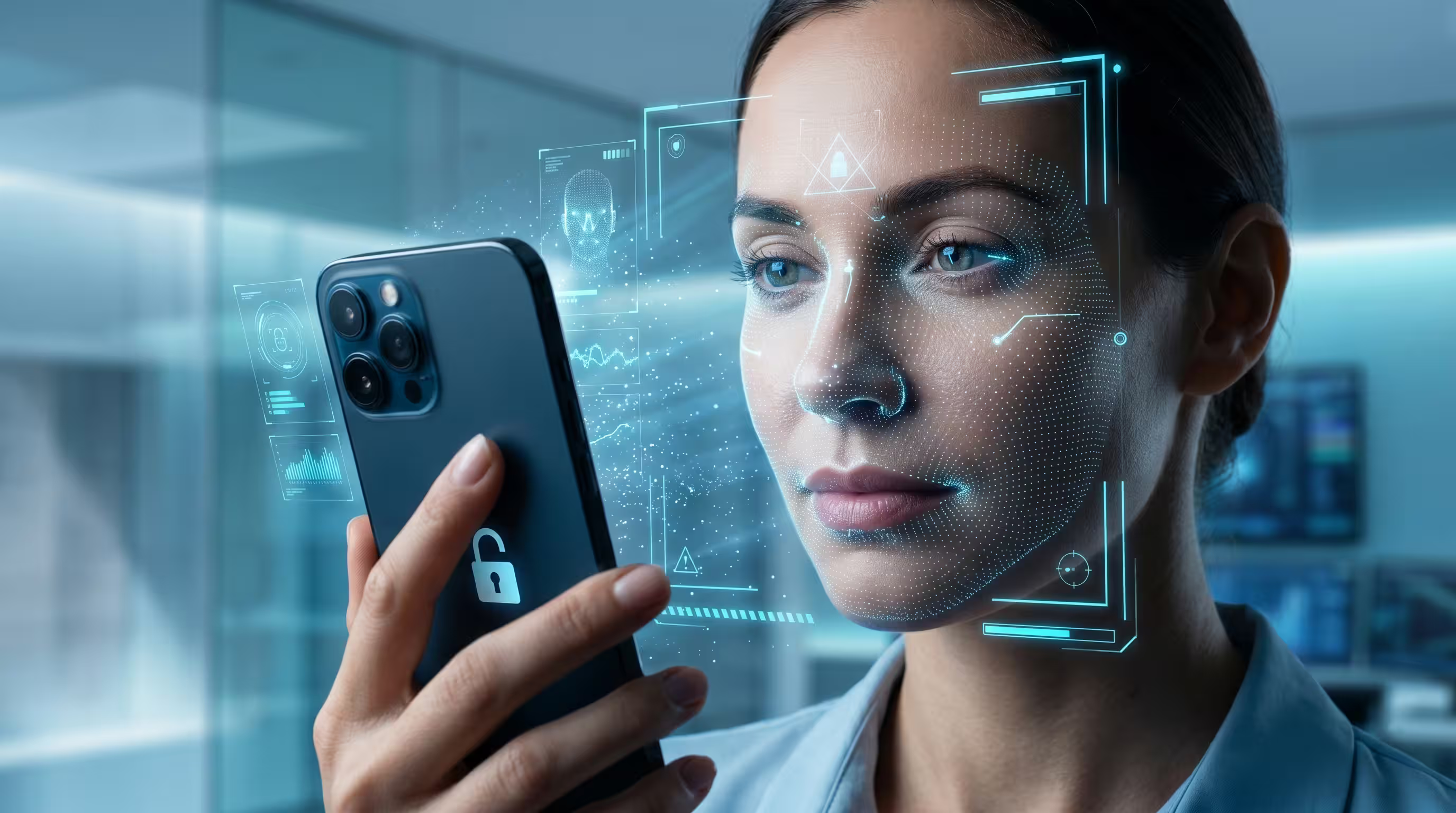
In the banking sector, it has gradually replaced traditional authentication methods, such as passwords and PIN numbers, with unique characteristics of the individual, such as facial recognition or fingerprints. This improves security and provides customers with a smoother transaction experience.
Biometric validation is an adopted solution across all types of businesses and industries. It can be applied for: securing mobile devices, applications and sensitive data, or efficient and secure access control at airports, train stations, ports and other entry points. This streamlines security processes, minimizes fraud and improves the overall traveler experience.
The global biometrics market was valued at USD 27.09 billion in 2020 and is projected to be worth USD 62.52 billion by 2026, registering a CAGR of 15.2% during the forecast period of 2021-2026. Source: Mordor Intelligence